Why Workers Walk Off at Smoko: The Three Reasons
It is not the work and it is not the rate. Workers leave a site over three things: being treated as disposable, having no toilet or water, or being asked to do something unsafe. All three are fixable before he arrives.
Not the work. Not the rate. Three things make a worker pick up his bag at the first break:
- Disrespect, bullying or harassment — treated as disposable because he is the casual
- No toilet, no water — the absolute minimum, and some jobs genuinely do not have it
- Asked to do something unsafe — or something he holds no ticket for
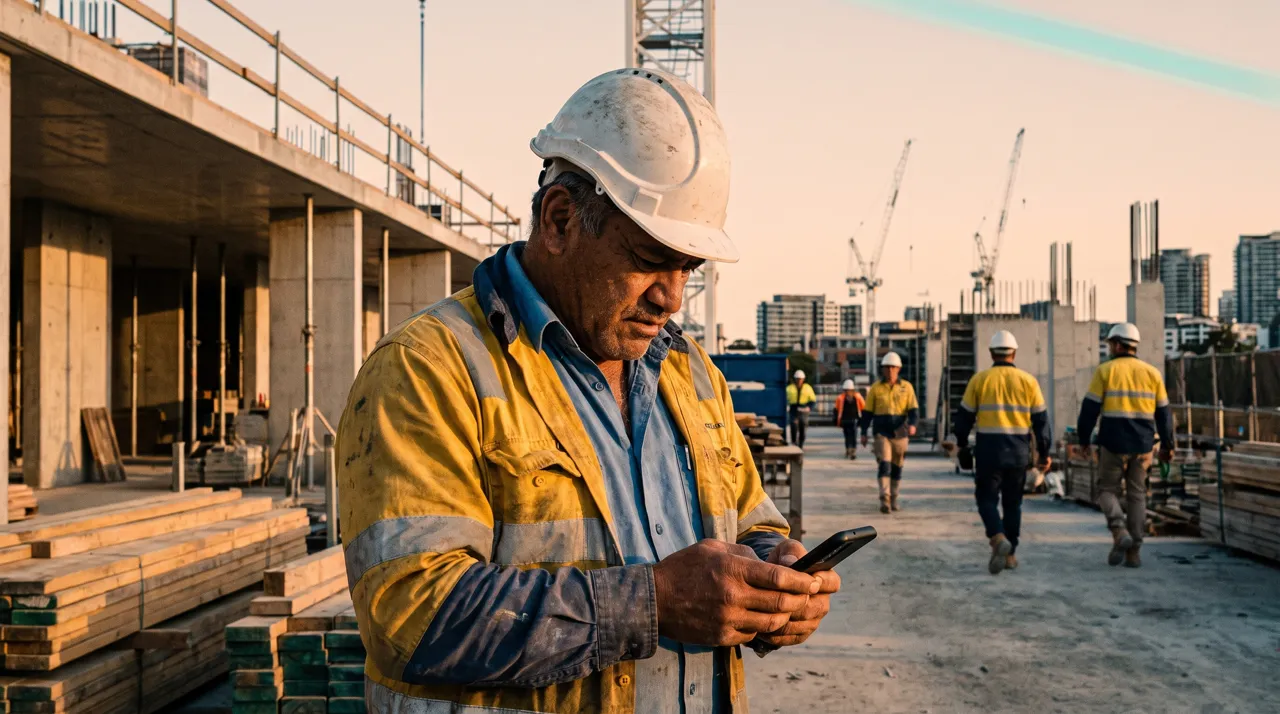
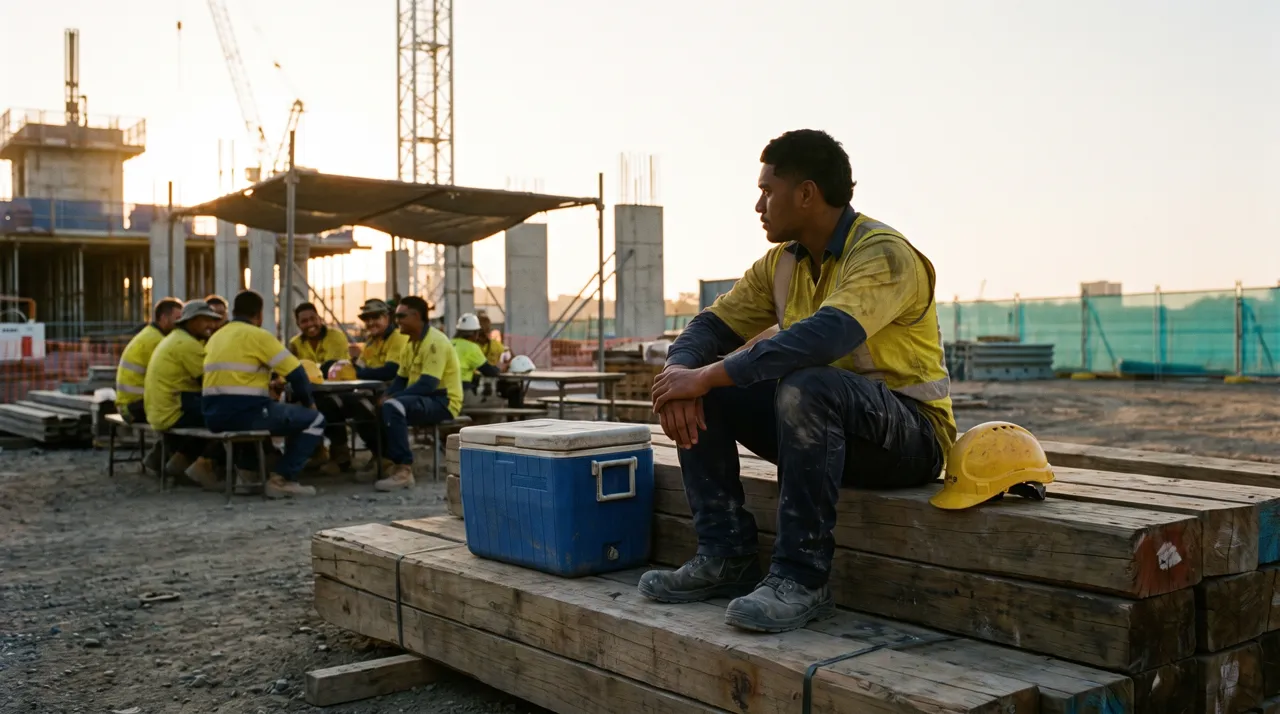
🦺 A bloke turns up, works the morning, and does not come back from smoko.
The site's version is usually that labour hire is unreliable. Nine times out of ten the real reason is one of three things, and every one of them was decided before he ever picked up a tool.
1. He was treated as disposable
The one that comes up most, and the one sites find hardest to hear.
Some crews treat the agency worker as a lesser category of person because he is a casual — spoken to differently, given every rubbish job with no rotation and no explanation, corrected in front of everyone, left out of the conversation in the crib room.
It has happened to our workers. Not as a rare event, and it is the reason we hear most often when someone declines to go back.
Being casual is a contract, not a rank. Plenty of sites treat it as a rank.The line worth remembering: a bloke who is spoken to like that at 9am has no incentive to be there at 10. He has other options and no reason to absorb it.
Bullying and harassment on site are not culture issues to be smoothed over either. The host must provide a workplace free of discrimination and harassment — that is a duty of the business controlling the site, not a nice-to-have.
2. There was no toilet and no water
The simplest one on the list and it still happens.
The business controlling the site must provide basic amenities — a toilet and running water. That is the floor, and it is not negotiable because a job is remote or a facility has not arrived yet.
⚠️ We see this most on remote or early-stage jobs where nothing has been set up yet. From the worker's side there is no way to read it as an oversight — it reads as a site that has not thought about the people on it. And there is no version of a working day that functions without water.
If your amenities are not on site yet, say so when you place the order. That is a solvable conversation in advance and an abandoned shift on the day.
No water is not an oversight from where he's standing. It's a statement about whether anyone thought about him.3. He was asked to do something unsafe
The third one, and the one with the most serious tail.
It usually arrives as a reasonable-sounding request. Jump on that machine. Give the boys a hand up there. Just move that while the plant is running.
The worker either does not hold the ticket, has not been trained for the task, or can see that the way it is being done is not safe. So he refuses, and then he leaves, because refusing once and staying is often more uncomfortable than going.
The host must only assign tasks the worker is qualified for. A worker who says "I'm not ticketed for that" is not being difficult — he is stopping the site from breaching a duty it already holds.
A worker who refuses an unsafe task is doing your job for you. Treat it that way and he stays.The fix is upstream, and it is one conversation
All three are solved in the same place: being specific when you order, and briefing your own crew.
Notice that none of it costs money and none of it needs a system. It is four things said out loud before the worker arrives.
Treat him as crew. Have a toilet and water. Do not ask him to do what he is not ticketed for. Get those three right and the smoko problem essentially disappears — because the work was never what he was leaving.
Why it costs more than one shift
📋 A worker who walks does not file a complaint. He declines the next booking at your site and says nothing.
That is why it is worth asking the agency directly whether anything was said. The answer is usually specific, usually small, and it is the only feedback your site will get about how its mornings actually land.
Want workers who come back after the break? Tell us what your site provides and we will brief the crew properly →
Related reads worth your time:
- Why good workers leave Sydney sites
- Host employer responsibilities on a Sydney site
- Site culture is decided in the first ten minutes
- Casual labour hire in Sydney: what the host provides
Frequently Asked Questions
Why do labour hire workers walk off a site?+
Three reasons account for almost all of it: being disrespected, bullied or harassed for being a casual; a site with no toilet or running water; and being asked to do something unsafe or something they are not ticketed for. The work itself is rarely the reason.
Is walking off a site about the pay rate?+
No. The rate was known before the shift was accepted, so it is not what changes on the morning. What changes is how the person is treated, whether the basics are there, and whether they are being asked to do something they should not be doing.
What amenities must a host site provide?+
At minimum a toilet and running water, along with a safe, discrimination-free and harassment-free workplace, a hazard briefing and induction, and only tasks the worker is qualified for. Those are duties of the business controlling the site.
What should a worker do if asked to do something unsafe?+
Say they are not ticketed or trained for it and ask for something they are. The host must only assign tasks a worker is qualified for, so raising it helps them meet a duty rather than obstructing the job.
How do you stop labour hire workers leaving your site early?+
Be specific when you order. Tell the agency what the job actually involves, what the amenities are, and what tickets are needed, then brief your own crew that the agency worker is part of the team for the day.
Does a worker walking off affect future bookings at that site?+
Yes. Workers talk and they decline repeat bookings without explaining why. A site that loses people early becomes quietly harder to fill, and the reason rarely reaches the person who could actually fix it.